 OVERVIEW
 OVERVIEW
If you've ever been out in the woods and gotten a rash, you may have wondered what plant caused it. Chances are, it was one of the poisonous plants: Poison Ivy, Poison Oak, or Poison Sumac. These plants can cause serious rashes if you come into contact with them. In this article, we will discuss the symptoms of these rashes, how to treat them, and how to avoid them in the future.
What are poison ivy, oak, and sumac plants, and what do they look like?
Poison Ivy, Poison Oak, and Poison Sumac are all plants that contain a substance called urushiol. This substance is found in these plants' leaves, stems, and roots.
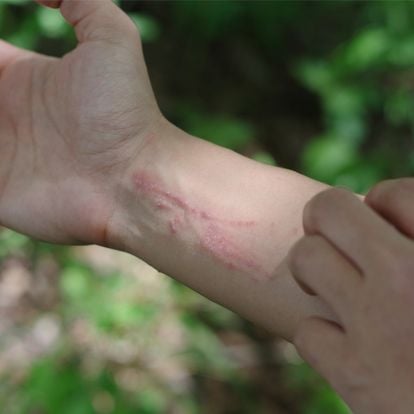
When it comes into contact with skin, it can cause a red, blistering rash. The rash is usually not serious and will go away, but it can be very uncomfortable.
Poison Ivy, Poison Oak, and Poison Sumac all have different appearances. Poison Ivy is a vine with three-lobed leaves that grows in clusters of three. The leaves are usually green in the spring and summer, and they turn red or orange in the fall.
Poison Oak is a shrub with three-lobed leaves and growing in clusters of three. The leaves are usually green in the spring and summer, and they turn red or orange in the fall.
Poison Sumac is a tree with leaves that grow in pairs along the stem. The leaves are green in the spring and summer.
How do you get a rash from these plants, and how long does it last?
If you come into contact with the leaves, stems, or roots of Poison Ivy, Poison Oak, or Poison Sumac, you may develop a rash.
The rash is caused by the urushiol in the plants coming into contact with your skin. It usually takes 12-24 hours for the rash to appear after exposure. The rash can last for two weeks or more and can be very itchy.
What are the best ways to treat poison ivy, oak, or sumac rash? How can you treat poison ivy, oak, or sumac rash?
If you're dealing with poison ivy, oak, or sumac rash, there is no cure for the rash, but there are ways to relieve the symptoms; they include
- Cleansing the affected skin with mild soap and water
- Taking an over-the-counter antihistamine
- Applying an oatmeal bath
- Using calamine lotion.
- If the rash is severe, you may need to see a doctor.
How can you avoid these plants? Can you prevent rashes from these plants by taking certain precautions?
The best way to avoid getting poison ivy, oak, or sumac rash is to learn to identify these plants and stay away from them. If you are going to be in an area where these plants are found, wear long pants and long sleeves to protect your skin and gloves. You should also avoid touching these plants, even if you wear gloves. If you think you may have come into contact with one of these plants, wash the area with soap and water as soon as possible.
Can you die from a reaction to poison ivy, oak, or sumac?"
No, you cannot die from a reaction to poison ivy, oak, or sumac. While the rash can be uncomfortable, it is not life-threatening. If you have a severe reaction, you may need to see a doctor, but you will not die from the rash. Poison ivy, oak, and sumac are not deadly plants.
Are there any other plants that can cause rashes similar to poison ivy, oak, and sumac plants?"
Yes, other plants can cause rashes similar to poison ivy, oak, and sumac plants. These include Poison Hemlock and Poison Dogwood. If you contact any of these plants, wash the area with soap and water as soon as possible. Seek medical attention if the rash is severe.
Conclusion:
Knowing that contact with certain plants can spoil your fun outdoors, take the necessary precautions to prevent rashes. And if you, unfortunately, do come in contact with Poison Ivy, Poison Oak, or Poison Sumac, don't worry! The rash is not life-threatening and will go away on its own eventually. Just be sure to treat the symptoms so that you can find relief from the itchiness.