What Are Spider Veins?
Most of us, at some point during our lifetime, will develop spider veins—those tiny, purple, web-like veins caused by twisted blood vessels. While they aren’t serious they can be uncomfortable and unsightly. If you’ve been wondering about ways to get rid of spider veins, a dermatologist is going to be the ideal medical specialist to turn to, to discuss treatment options.
What are spider veins?
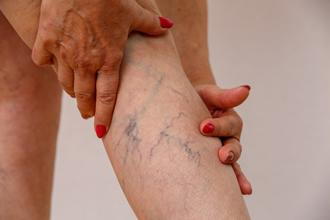
These small raised, swollen, and twisted blood vessels are often red, purple, or blue and are easily seen through the skin. Spider veins most commonly appear on the legs and face.
Are there any symptoms of spider veins?
Both spider and varicose veins often don’t produce any symptoms; however, some people may experience swelling, aching, burning, tingling, or cramping of the legs.
What causes spider veins?
There are a variety of reasons why spider veins may develop including,
- Obesity
- Heredity
- Jobs that require standing for long periods (e.g. nursing)
- Birth control pills
- Medical history of blood clots
- Pregnancy
Are there risk factors for developing spider veins?
Besides the causes above, age and gender also play a role. More women than men develop spider veins. The likelihood of developing spider veins as you age also increases. It’s believed that anywhere from 30 percent to 60 percent of adults have spider veins.
What can I do to treat spider veins?
There are many different ways in which a dermatologist can treat spider veins including,
- Recommending support stockings: They can reduce any pain or discomfort associated with spider veins
- Altering your lifestyle: this includes losing weight if necessary, taking care of your skin, and increasing physical activity (which can sometimes help spider veins)
- Sclerotherapy: a common procedure used to remove unsightly spider veins. By injecting saline solution into the vein, the vein will disappear over the next couple of weeks
There are other solutions out there as well including surgery, intense pulsed light (IPL) treatment, radiofrequency occlusion, and endovenous laser treatment. We would be happy to sit down and talk with you about which treatment would work best for your needs.
Dealing with spider veins? Want to get spider vein-free legs that you can wait to show off? If so, it’s the perfect time to turn to your dermatologist to discuss ways of getting rid of your spider veins.
What Are Spider Veins?
Most of us, at some point during our lifetime, will develop spider veins—those tiny, purple, web-like veins caused by twisted blood vessels. While they aren’t serious they can be uncomfortable and unsightly. If you’ve been wondering about ways to get rid of spider veins, a dermatologist is going to be the ideal medical specialist to turn to, to discuss treatment options.
What are spider veins?
These small raised, swollen, and twisted blood vessels are often red, purple, or blue and are easily seen through the skin. Spider veins most commonly appear on the legs and face.
Are there any symptoms of spider veins?
Both spider and varicose veins often don’t produce any symptoms; however, some people may experience swelling, aching, burning, tingling, or cramping of the legs.
What causes spider veins?
There are a variety of reasons why spider veins may develop including,
- Obesity
- Heredity
- Jobs that require standing for long periods (e.g. nursing)
- Birth control pills
- Medical history of blood clots
- Pregnancy
Are there risk factors for developing spider veins?
Besides the causes above, age and gender also play a role. More women than men develop spider veins. The likelihood of developing spider veins as you age also increases. It’s believed that anywhere from 30 percent to 60 percent of adults have spider veins.
What can I do to treat spider veins?
There are many different ways in which a dermatologist can treat spider veins including,
- Recommending support stockings: They can reduce any pain or discomfort associated with spider veins
- Altering your lifestyle: this includes losing weight if necessary, taking care of your skin, and increasing physical activity (which can sometimes help spider veins)
- Sclerotherapy: a common procedure used to remove unsightly spider veins. By injecting saline solution into the vein, the vein will disappear over the next couple of weeks
There are other solutions out there as well including surgery, intense pulsed light (IPL) treatment, radiofrequency occlusion, and endovenous laser treatment. We would be happy to sit down and talk with you about which treatment would work best for your needs.
Dealing with spider veins? Want to get spider vein-free legs that you can wait to show off? If so, it’s the perfect time to turn to your dermatologist to discuss ways of getting rid of your spider veins.

Ormond Beach
400 Lakebridge Plaza Drive
Ormond Beach, FL 32174
Phone: (386) 677-9044
Ormond Beach
1385 West Granada Blvd., Ste 1
Ormond Beach, FL 32174
Phone: (386) 677-9044
Port Orange
1175 Dunlawton Avenue, Unit 102
Port Orange, FL 32127
Phone: (386) 265-1913
New Smyrna Beach
501 South Orange Street
New Smyrna Beach, FL 32168
Phone: (386) 410-5045
Palm Coast
33 & 37 Old Kings Road North
Palm Coast, FL 32137
Phone: (386) 225-4607
Orange City
2515 Junior Street
Orange City, FL 32763
Phone: (386) 218-6806