What is Dermatitis?
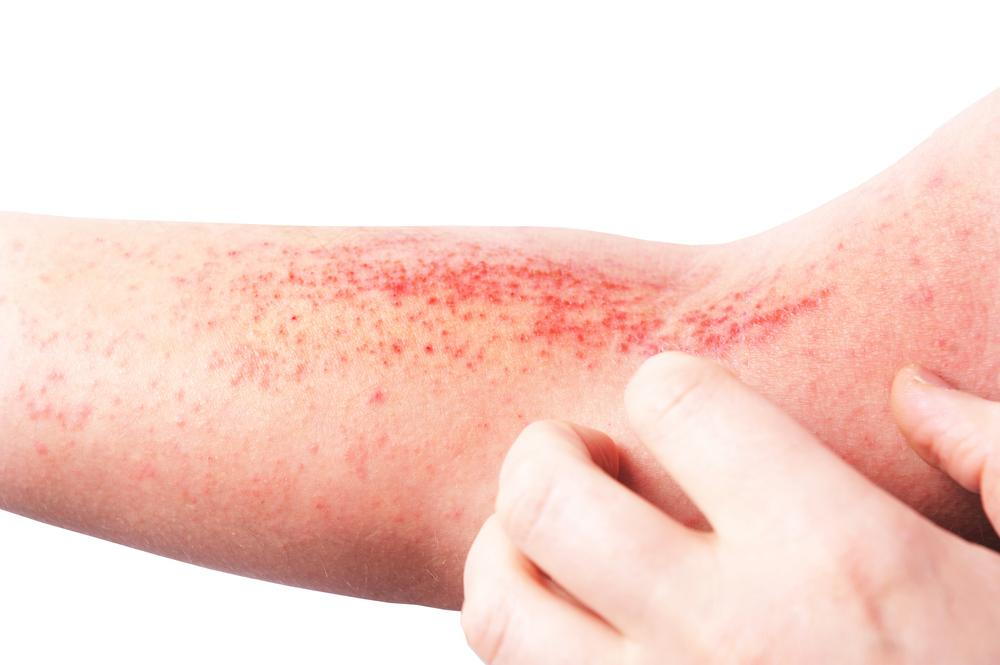
If you’ve suddenly noticed your skin breaking out in a red, itchy rash, you could be dealing with dermatitis, a common skin condition that often leads to a red, swollen rash, or dry and intensely itchy skin. Sometimes dermatitis can even cause oozing or scaling blisters to form. This condition may be embarrassing but don’t worry—it isn’t contagious.
The most common types of dermatitis include:
- Contact dermatitis: occurs when an allergen comes in contact with your skin
- Eczema or atopic dermatitis: most commonly inherited
- Dyshidrotic dermatitis: often appears on the hands and feet
- Seborrheic dermatitis: a type of dermatitis that often affects the scalp (dandruff)
The causes really depend on the type of dermatitis you have. For example, contact dermatitis occurs when you come in contact with an allergen such as certain detergents, poison ivy, or nickel. Eczema most often runs in families and occurs more frequently in those with allergies or asthma.
With dermatitis, it is common to experience flare-ups with bouts of remission. Common symptom triggers include environmental or hormonal changes, stress, or certain irritants (e.g. new detergents; perfumes).
Since the symptoms of dermatitis are similar to other skin conditions, it is important to see a dermatologist for a proper diagnosis. Some types of dermatitis can be diagnosed through a simple physical exam; however, if your dermatologist believes that your symptoms are due to an allergic reaction, then allergy testing may be necessary to determine what’s causing your dermatitis.
Those with mild symptoms may find relief through over-the-counter antihistamines and topical creams to stop itching and redness; however, a dermatologist can create a customized treatment plan based on the type of dermatitis you are dealing with and your symptoms. Along with home care (e.g. oatmeal baths; cold compresses) and over-the-counter medications, a dermatologist may also prescribe stronger antihistamines, topical steroids, or oral medication to ease more serious flare-ups.
Your dermatologist can also discuss ways to prevent flare-ups including treating and preventing dry skin, using a proper moisturizer, and implementing necessary dietary changes. Some patients also find that alternative therapies such as acupuncture or massage therapy help reduce the number and severity of flare-ups.
If you are experiencing symptoms of dermatitis, it is important that you see your dermatologist right away for care. The sooner you seek treatment the sooner you will experience relief.
What is Dermatitis?
If you’ve suddenly noticed your skin breaking out in a red, itchy rash, you could be dealing with dermatitis, a common skin condition that often leads to a red, swollen rash, or dry and intensely itchy skin. Sometimes dermatitis can even cause oozing or scaling blisters to form. This condition may be embarrassing but don’t worry—it isn’t contagious.
The most common types of dermatitis include:
- Contact dermatitis: occurs when an allergen comes in contact with your skin
- Eczema or atopic dermatitis: most commonly inherited
- Dyshidrotic dermatitis: often appears on the hands and feet
- Seborrheic dermatitis: a type of dermatitis that often affects the scalp (dandruff)
The causes really depend on the type of dermatitis you have. For example, contact dermatitis occurs when you come in contact with an allergen such as certain detergents, poison ivy, or nickel. Eczema most often runs in families and occurs more frequently in those with allergies or asthma.
With dermatitis, it is common to experience flare-ups with bouts of remission. Common symptom triggers include environmental or hormonal changes, stress, or certain irritants (e.g. new detergents; perfumes).
Since the symptoms of dermatitis are similar to other skin conditions, it is important to see a dermatologist for a proper diagnosis. Some types of dermatitis can be diagnosed through a simple physical exam; however, if your dermatologist believes that your symptoms are due to an allergic reaction, then allergy testing may be necessary to determine what’s causing your dermatitis.
Those with mild symptoms may find relief through over-the-counter antihistamines and topical creams to stop itching and redness; however, a dermatologist can create a customized treatment plan based on the type of dermatitis you are dealing with and your symptoms. Along with home care (e.g. oatmeal baths; cold compresses) and over-the-counter medications, a dermatologist may also prescribe stronger antihistamines, topical steroids, or oral medication to ease more serious flare-ups.
Your dermatologist can also discuss ways to prevent flare-ups including treating and preventing dry skin, using a proper moisturizer, and implementing necessary dietary changes. Some patients also find that alternative therapies such as acupuncture or massage therapy help reduce the number and severity of flare-ups.
If you are experiencing symptoms of dermatitis, it is important that you see your dermatologist right away for care. The sooner you seek treatment the sooner you will experience relief.

Ormond Beach
400 Lakebridge Plaza Drive
Ormond Beach, FL 32174
Phone: (386) 677-9044
Ormond Beach
1385 West Granada Blvd., Ste 1
Ormond Beach, FL 32174
Phone: (386) 677-9044
Port Orange
1175 Dunlawton Avenue, Unit 102
Port Orange, FL 32127
Phone: (386) 265-1913
New Smyrna Beach
501 South Orange Street
New Smyrna Beach, FL 32168
Phone: (386) 410-5045
Palm Coast
33 & 37 Old Kings Road North
Palm Coast, FL 32137
Phone: (386) 225-4607
Orange City
2515 Junior Street
Orange City, FL 32763
Phone: (386) 218-6806